-
-
Olive Hospital: Nanalnagar, ‘X’ Road, Mehdipat...
Hyderabad TS - 500028
Contact Info
-
Address
Olive Hospital: Nanalnagar, ‘X’ Road, Mehdipatnam, Hyderabad.
Appointments: 040 40 499 500.
Olive Sarvodaya Hospital: Adj. to Asif Nagar Police Station, Asif Nagar, Hyderabad TS - 500028
Appointments: 040 67 499 500
Hyderabad TS - 500028 -
Phone
9951108100
-
Email
info@olivehospitals.com
22
Jan
Thyroid Health
Understanding Disorders, Recognizing Symptoms, and Exploring Modern Treatment
Nestled at the base of your neck, the thyroid gland is a small, butterfly-shaped powerhouse of the endocrine system. As a leading center for endocrinology in Hyderabad, the specialists at Olive Hospital understand that this gland's delicate hormonal balance is crucial for regulating your metabolism, energy, heart function, and overall well-being. When this balance is disrupted, it can lead to a spectrum of disorders that affect millions. This comprehensive guide explores the types, symptoms, and advanced treatment pathways for thyroid disorders, emphasizing the personalized care available at our Hyderabad facility.
The Thyroid Gland: Your Body's Metabolic Conductor
The thyroid gland produces two primary hormones: Thyroxine (T4) and Triiodothyronine (T3). These hormones travel through your bloodstream, influencing the function of virtually every cell and organ. They regulate how your body uses energy, controls temperature, and maintains heart, muscle, and brain function. Thyroid disorders primarily manifest in two ways: Hypothyroidism (underactive thyroid) and Hyperthyroidism (overactive thyroid). Early recognition and expert management are key to restoring balance and preventing complications.
Common Thyroid Disorders: Types and Causes
1. Hypothyroidism (Underactive Thyroid)
This occurs when the thyroid gland fails to produce sufficient hormones, slowing down the body's processes.
- Primary Causes:
- Hashimoto's Thyroiditis: The most common cause, this is an autoimmune disorder where the body's immune system mistakenly attacks and gradually destroys the thyroid gland.
- Iodine Deficiency: Though less common in iodized salt regions, it remains a global cause.
- Post-Treatment Hypothyroidism: Can occur after surgical removal of the thyroid or following radioactive iodine treatment for hyperthyroidism.
- Congenital Hypothyroidism: Thyroid gland that is underdeveloped or absent at birth.
2. Hyperthyroidism (Overactive Thyroid)
This condition results from excessive production of thyroid hormones, accelerating the body's metabolism.
- Primary Causes:
- Graves' Disease: The most prevalent cause, an autoimmune disorder where antibodies stimulate the thyroid to overproduce hormones.
- Thyroid Nodules: Lumps within the thyroid gland that can become overactive, a condition known as toxic nodular goiter.
- Thyroiditis: Inflammation of the thyroid gland causing a temporary leak of stored hormones into the bloodstream.
3. Thyroid Nodules and Goiter
- Thyroid Nodules: Lumps that can form within the thyroid. While most are benign, evaluation is essential to rule out cancer.
- Goiter: A general enlargement of the thyroid gland, which can be associated with both hypo- and hyperthyroidism, or exist with normal hormone levels (euthyroid goiter).
Recognizing the Signs: Symptoms of Thyroid Imbalance
Symptoms often develop gradually and can be mistaken for stress or aging. It's crucial to consult an endocrinologist if you experience a cluster of these signs.
Symptoms of Hypothyroidism (Slowed Metabolism):
- Persistent Fatigue and Lethargy: Feeling exhausted despite adequate sleep.
- Unexplained Weight Gain: Difficulty losing weight despite no change in diet or exercise.
- Cold Intolerance: Feeling unusually cold when others are comfortable.
- Dry Skin and Hair, Hair Loss: Brittle nails and thinning hair, especially the outer third of the eyebrows.
- Constipation: Slowed digestive function.
- Depression and Brain Fog: Low mood, memory lapses, and difficulty concentrating.
- Heavy or Irregular Menstrual Periods.
- Muscle Aches and Stiffness.
Symptoms of Hyperthyroidism (Accelerated Metabolism):
- Unexplained Weight Loss: Despite increased appetite.
- Anxiety, Nervousness, and Irritability: Feeling jittery or on edge.
- Rapid or Irregular Heartbeat (Palpitations): Often accompanied by heightened blood pressure.
- Heat Intolerance and Excessive Sweating.
- Tremors: Fine shaking in the hands and fingers.
- Fatigue with Insomnia.
- Frequent Bowel Movements.
- Fine, Brittle Hair and Skin Changes.
- Light or Missed Menstrual Periods.
- Bulging Eyes (Exophthalmos): A specific symptom often associated with Graves' disease.
Advanced Diagnosis at Olive Hospital, Hyderabad
Accurate diagnosis is the cornerstone of effective treatment. Our endocrinology department utilizes a comprehensive diagnostic approach:
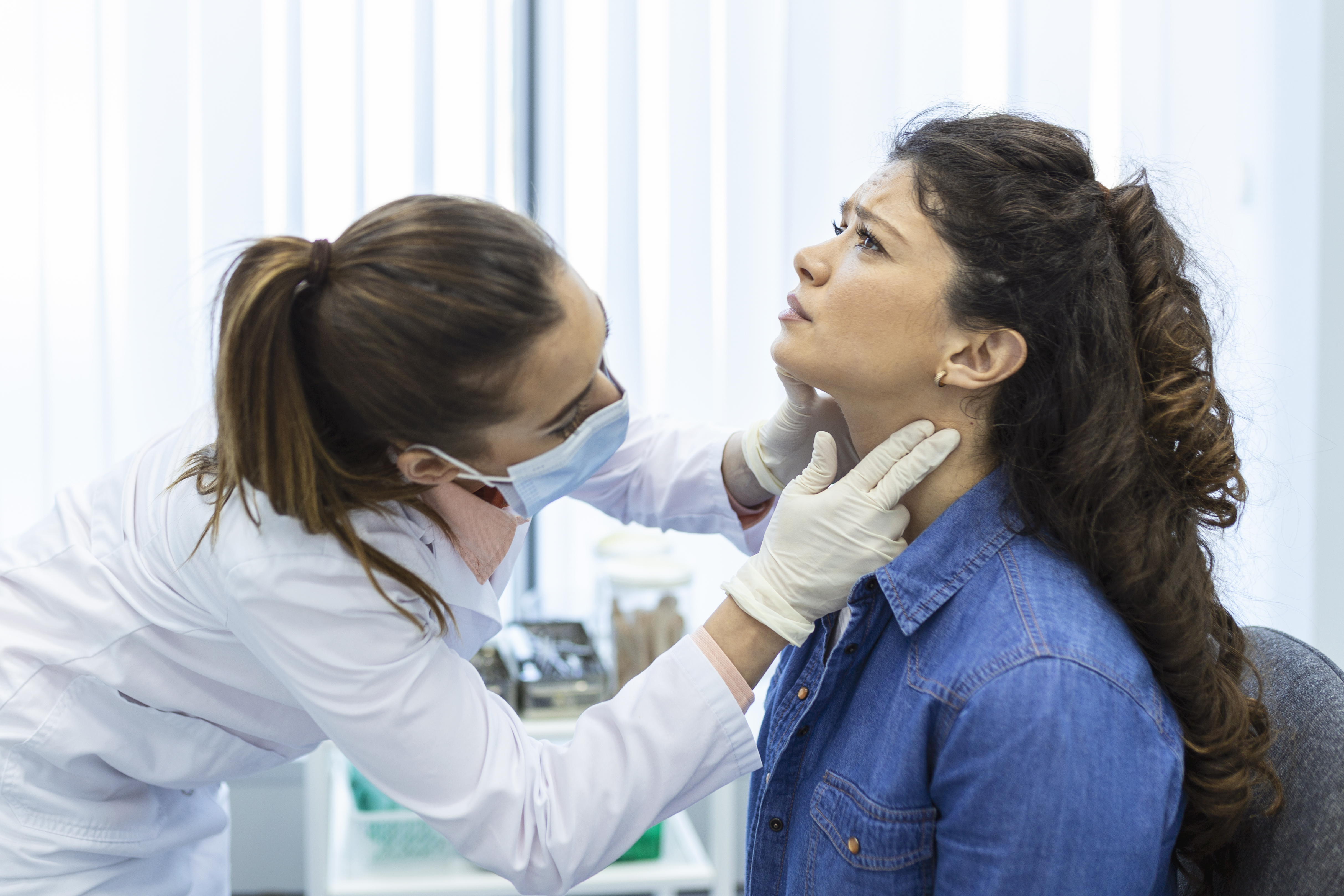
- Detailed Clinical Evaluation: A thorough assessment of symptoms, medical history, and physical examination, including checking for neck enlargement.
- Blood Tests: Precise measurement of Thyroid-Stimulating Hormone (TSH), Free T4, Free T3, and thyroid antibodies (for autoimmune causes).
- Imaging:
- Thyroid Ultrasound: A painless, non-invasive test to visualize the gland's structure, detect nodules, and assess their characteristics.
- Radioactive Iodine Uptake (RAIU) Scan: To evaluate gland function and help determine the cause of hyperthyroidism.
- Fine-Needle Aspiration (FNA) Biopsy: For suspicious nodules, this minimally invasive procedure, often guided by ultrasound, extracts cells for cytological analysis to rule out cancer.
Personalized Treatment Pathways at Olive Hospital
Our philosophy centers on creating a tailored treatment plan for each patient, leveraging the latest medical and surgical advancements.
Treating Hypothyroidism:
- Synthetic Thyroid Hormone Replacement (Levothyroxine): The standard, highly effective treatment. Our specialists precisely calibrate the dosage through regular monitoring to restore normal hormone levels, alleviating symptoms and preventing complications.
Treating Hyperthyroidism:
- Anti-Thyroid Medications (Methimazole, Propylthiouracil): These drugs reduce hormone production. They are often used as a first-line treatment or to prepare patients for definitive therapy.
- Radioactive Iodine Therapy (RAI): A common and effective outpatient treatment where a capsule or liquid of radioactive iodine is ingested. It is selectively absorbed by the overactive thyroid cells, gradually shrinking the gland and reducing hormone production.
- Surgery (Thyroidectomy): Recommended for large goiters, suspicious nodules, pregnancy, or when other treatments are unsuitable or ineffective.
- Minimal Access Thyroid Surgery: At Olive Hospital, our expert endocrine surgeons specialize in minimally invasive and robotic-assisted techniques. These procedures, performed through small incisions (often in a cosmetically favorable location), offer significant benefits:
- Reduced Scarring: Nearly invisible scars.
- Less Post-operative Pain.
- Faster Recovery and Shorter Hospital Stay.
- Precision Preservation: Enhanced ability to preserve healthy parathyroid glands and vocal cord nerves.
Treating Thyroid Nodules and Cancer:
- Monitoring: Small, benign nodules may only require regular ultrasound surveillance.
- Surgery: The primary treatment for thyroid cancer. Our surgeons are skilled in total thyroidectomy and minimally invasive lymph node dissection when needed.
Living Well with a Thyroid Disorder
Management extends beyond medication. Our team provides holistic guidance:
- Nutritional Counseling: Advice on a balanced diet. While extreme restrictions are rarely needed, we guide patients on soy, iodine, and cruciferous vegetables within a normal diet.
- Lifestyle Support: Stress management and regular exercise are encouraged.
- Long-term Monitoring: Ensuring stable hormone levels through periodic check-ups is vital for lifelong health.
Thyroid disorders are manageable, and with the right care, individuals can lead full, healthy lives. If you identify with the symptoms discussed, do not dismiss them. The expert endocrinologists and surgeons at Olive Hospital, Hyderabad, are equipped with advanced diagnostic technology and treatment modalities—including state-of-the-art minimal access thyroid surgery—to provide accurate diagnosis, effective treatment, and compassionate, continuous care.
Frequently Asked Questions (FAQs)
What is the most common thyroid disorder, and who is most at risk?
Hypothyroidism, often caused by Hashimoto's disease, is the most prevalent thyroid disorder. Women are 5 to 8 times more likely than men to develop thyroid problems, with risk increasing with age, especially after menopause. A family history of thyroid or other autoimmune diseases (like type 1 diabetes) also elevates risk.
I have a thyroid nodule found on an ultrasound. Does this mean I have cancer?
The vast majority of thyroid nodules-over 90%-are benign (non-cancerous). However, evaluation by an endocrinologist is crucial. At Olive Hospital, we use ultrasound characteristics and, if indicated, a Fine-Needle Aspiration (FNA) biopsy to accurately assess the nodule. Most patients with nodules simply require periodic monitoring.
Are the treatments for hyperthyroidism permanent?
Both radioactive iodine therapy and surgery are considered definitive treatments, often leading to a permanent reduction in thyroid hormone production. This frequently results in hypothyroidism, which is then easily and safely managed with daily thyroid hormone replacement medication.
Can I manage hypothyroidism through diet and lifestyle alone?
While a healthy lifestyle supports overall well-being, hypothyroidism cannot be cured or adequately managed by diet alone. The standard and essential treatment is thyroid hormone replacement medication (levothyroxine), which corrects the hormone deficiency. Diet and exercise complement the medication but do not replace it.
What makes Olive Hospital's surgical approach to thyroid disorders different?
Olive Hospital specializes in patient-centered, minimally invasive surgical techniques. For eligible patients, we offer:
- Minimal Access Thyroidectomy: Smaller incisions with better cosmetic results.
- Advanced Nerve Monitoring: Intraoperative technology to help preserve vocal cord function.
- Robotic-Assisted Surgery: For select cases, allowing unparalleled precision.
Our focus is on achieving the best clinical outcome while minimizing discomfort, scarring, and recovery time for our patients in Hyderabad.